The Happiness ROI: Why Well-Being is the Only Sustainable Strategy for 2026
For a long time, "happiness" was the red-headed stepchild of the boardroom. It was seen as a "nice-to-have," a fluffy metric reserved for HR retreats and breakroom posters with cats clinging to branches. But as we move through the first quarter of 2026, the data has officially staged a coup.
According to the World Happiness Report 2026 (WHR 2026), well-being isn't just a personal preference: it is the only sustainable business strategy left. In an era of rapid technological disruption and shifting demographics, your team’s internal state is your company’s greatest external advantage.
If you’re a high-capacity leader, you know the feeling of a "leaky" culture: high turnover, sluggish innovation, and a general sense of "hurry" that produces a lot of noise but very little signal. It’s time to stop treating well-being like a luxury and start treating it like the ROI-driving engine it actually is.
The Data: Trust is the New Currency
The 2026 report highlights a staggering shift in what drives global happiness. While income matters, it’s no longer the primary needle-mover. Instead, social connection and trust have emerged as the primary drivers of human flourishing.
In the U.S., we are currently battling a "loneliness epidemic" that is doing more damage to our bottom lines than any market fluctuation. When trust is low, the cost of doing business goes up: we call this the "trust tax." You see it in endless CC’d emails, redundant approval layers, and the hesitation to take risks.
However, the WHR 2026 found something fascinating: High social capital (trust and community) reduces the stress of income gaps by 80%.
Think about that. When people trust their leaders and feel connected to their peers, the external pressures of the economy lose their grip. Community acts as a shock absorber for the soul. If you want a resilient team, you don’t need more perks; you need more trust
The Coaching Thermostat: Stabilizing Your Happiness Set Point
We all have a "happiness set point": a baseline level of satisfaction we tend to return to regardless of external events. Some people are naturally "sunny," while others lean toward "stoic." But here’s the secret: your set point isn't fixed. It’s a thermostat, and you can turn it up.
This is where coaching moves from "advice" to "alchemy." In our work at Mark Mathia Coaching & Consulting, we view coaching as a stabilizer for your mood and a tool for mindset mastery.
We often see high-performers struggling with "self-interference." This is the internal dialogue: the "Inner Game": that creates friction between your potential and your performance. When you’re constantly second-guessing your decisions or operating from a place of fear, your happiness set point plummets.
Coaching helps you stay "on target" by aligning your daily output with a deep sense of purpose. This creates an internal locus of control. Instead of being a thermometer that merely reflects the temperature of the market, you become the thermostat that sets the temperature of your environment. When you lead from a place of alignment, engagement isn't something you have to "do": it’s the natural byproduct of who you are.
2026 Business Trends: The Human-Centric Shift
As we look at the landscape of American business this year, two major trends are reshaping how we work:
1. The Human-Centric AI Shift
We’ve moved past the "AI is taking our jobs" panic. In 2026, the trend is Human-Centric AI. We are using technology to automate the mundane so we can elevate the human. High-capacity leaders are leveraging tech to enable more human connection, not replace it. If your AI strategy doesn't free up your people to spend more time in high-trust, collaborative environments, you’re doing it wrong.
2. The "New Young" (The Second Act)
We are seeing a surge in what we call "The New Young": leaders in their 40s, 50s, and 60s who are eschewing traditional retirement in favor of high-impact "second acts." These leaders aren't looking to "fade out"; they are looking to pour their wisdom into purpose-driven ventures. They realize that happiness in this stage of life comes from contribution, not just consumption.

The Big Three: How to Elevate Your Happiness Set Point
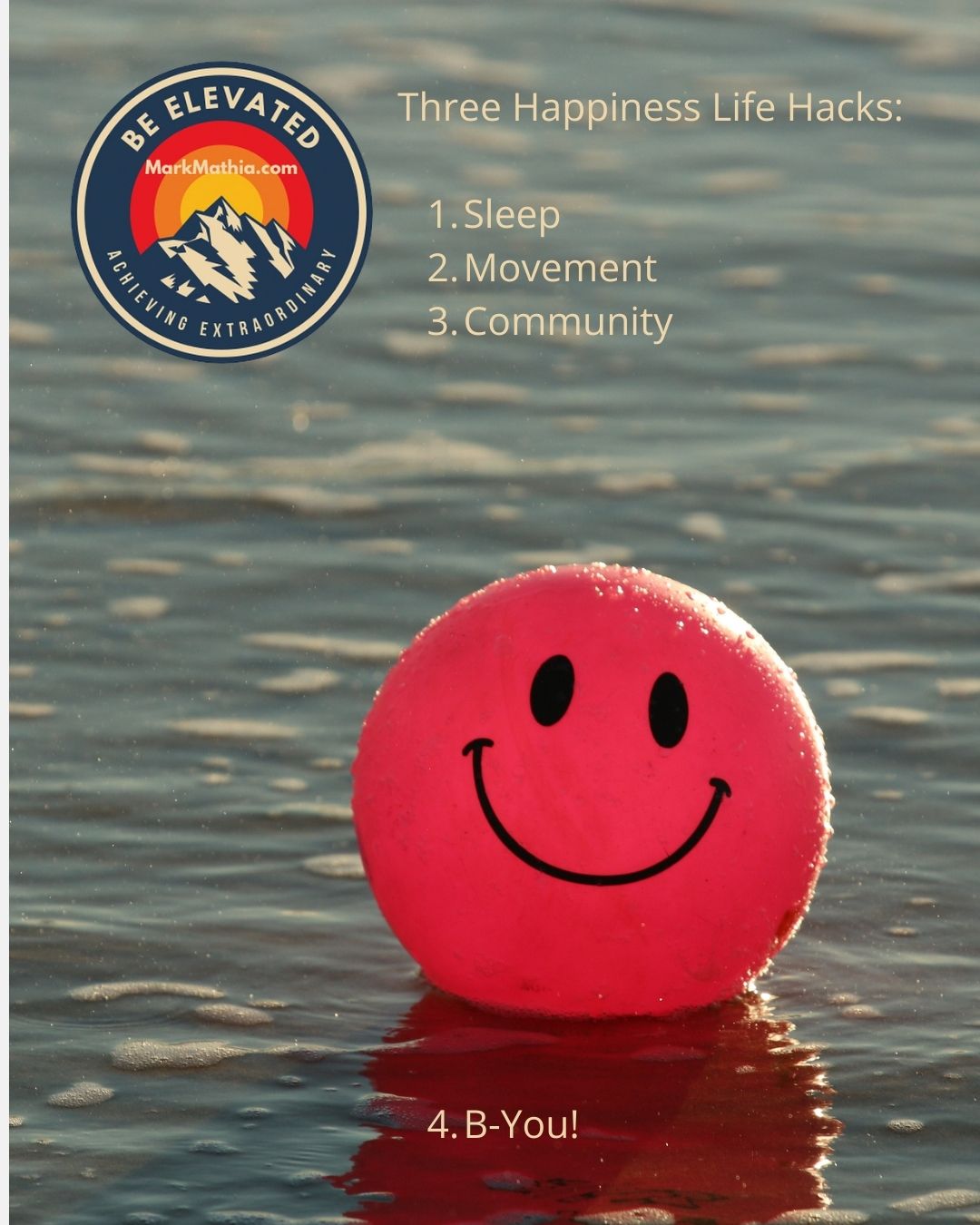
Everyone’s biology is different, but the fundamental mechanics of human flourishing are remarkably consistent. If you want to raise your happiness set point and increase your leadership capacity, you have to master "The Big Three."
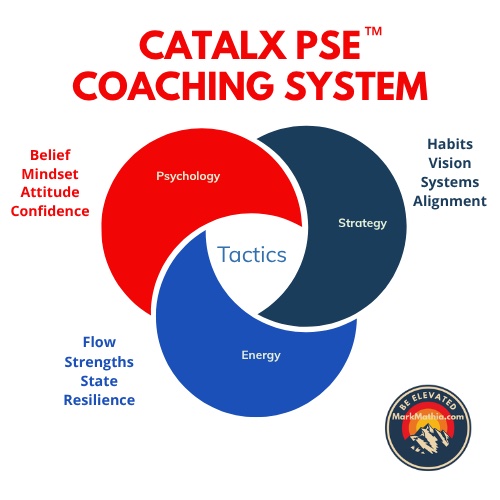
At Mark Mathia Coaching & Consulting, we integrate these into our CatalyX PSE™ Coaching System because you cannot lead others if your own internal "Energy" domain is depleted.
1. Sleep: The Brain's Essential Rinse Cycle
We have to stop wearing sleep deprivation like a badge of honor. Neuroscience shows that sleep is the brain’s "rinse cycle." It’s when your glymphatic system flushes out metabolic waste. Without it, your resilience crumbles, your emotional intelligence drops, and you become a liability to your team. High-performance leadership requires a rested brain. Period.
2. Sunshine: The Circadian Reset
It sounds too simple to be true, but direct sunlight has a profound impact on your circadian rhythms and mood stability. We weren't meant to live under flickering LEDs for 12 hours a day. Getting outside: even for 15 minutes: resets your internal clock and triggers the release of serotonin. It’s a tactical move for your mental health.
3. Community: The Oxytocin-Driven Antidote to Burnout
This is where we reference the "Ruthless Elimination of Hurry." Burnout isn't caused by having too much to do; it’s caused by trying to do it all alone and too fast. Community is the oxytocin-driven antidote to the cortisol of the modern workplace. We need high-performing partnerships. We need people who know our strengths and can "fill the gaps" when we’re over-extended.
Why This Matters for You
If you are a director, a C-suite executive, or a business owner, your well-being is the "lid" on your organization’s growth. As John Maxwell famously noted, the Law of the Lid says that your leadership ability determines your level of effectiveness. In 2026, we’ve updated that: Your well-being determines your leadership ability.
When you are exhausted, lonely, and disconnected, you make "expensive" decisions. You react instead of responding. You build walls instead of bridges.
Investing in your happiness set point isn't selfish: it’s a fiduciary responsibility. It’s the difference between a career that burns out and a legacy that burns bright.
Taking the Next Step
Are you ready to move from "hurry" to "high-performance"? Are you tired of feeling like your happiness is at the mercy of the next quarterly report?
Let’s talk about elevating your journey. Whether it’s mastering the "Inner Game" of leadership or building a team culture rooted in strengths and trust, we are here to help you navigate the complexities of 2026.
Check out our resources or dive deeper into Strengths-Based Leadership to see how we can help you turn well-being into your most powerful competitive advantage.
Drop a comment below: What’s one shift you’ve made this year to protect your happiness set point? I’d love to hear what’s working for you.
