
Leading the Lean Team: Maximizing Strengths in Shrunken Orgs
Your team just got smaller. The expectations didn't.
If you're leading in 2026, you've likely felt this squeeze. AI automation, economic pressures, and organizational restructuring have created a new reality: leaner teams carrying heavier loads. And here's what I've noticed working with executives across Omaha and beyond, most leaders are responding to this challenge completely backward.
They're trying to spread the work evenly. They're asking everyone to "pitch in" on everything. They're treating their people like interchangeable parts.
And it's destroying performance.
Let's talk about why the old approach fails and what high-performing leaders do instead.
Why "All Hands on Deck" Is Sinking Your Ship
When teams shrink, the instinct is to have everyone cover more ground. It seems logical, right? Fewer people means everyone needs to be a generalist.
But here's the truth: generalists are expendable. Specialists in their Zone of Genius are irreplaceable.
Think about it this way. If you have five people and you spread them thin across twelve responsibilities, you end up with twelve tasks done at 60% capacity. Nobody is operating where they naturally excel. Everyone is exhausted. And the work product? Mediocre at best.
Now imagine those same five people, each locked into two or three responsibilities that align perfectly with their natural strengths. Suddenly you have focused excellence instead of scattered adequacy.
This isn't just theory. Research consistently shows that people who use their strengths every day are six times more likely to be engaged at work. In a lean environment, engagement isn't a nice-to-have: it's survival.

The Zone of Genius Problem
Here's what keeps me up at night when I work with leadership teams: most people have never been told what their Zone of Genius actually is.
They know what they're good at. They might even know what they enjoy. But the Zone of Genius: that intersection where natural talent meets deep fulfillment and produces exceptional results: remains a mystery to most professionals.
And when you're leading a lean team, you cannot afford that mystery.
Every person operating outside their Zone of Genius is costing you exponentially. They're working harder for lesser results. They're draining energy instead of generating it. They're surviving instead of thriving.
The tools exist to solve this. CliftonStrengths gives you the language and data to identify where each person naturally excels. The Enneagram reveals the motivational patterns underneath: why someone approaches work the way they do and what conditions help them flourish.
Together, these assessments create a map. And when your team is small, that map becomes your most valuable strategic asset.
The CatalX PSE™ Framework for Lean Teams
When I coach executives through team optimization, we use the CatalX PSE™ framework to ensure we're addressing the full picture. Lean team success isn't just about strategy: it requires alignment across three domains.
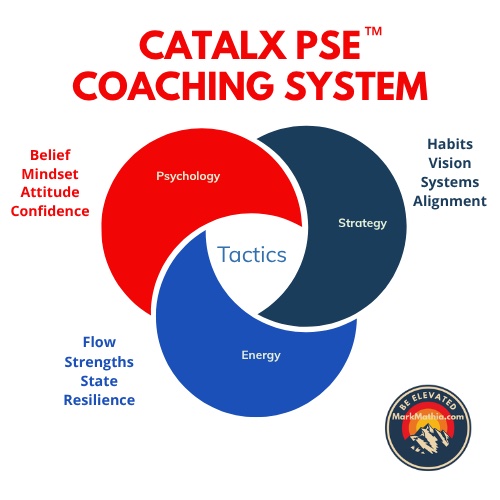
Psychology is where we start. What does each team member believe about their capabilities? What mindset are they bringing to increased demands? Confidence and belief drive discretionary effort: that extra energy people give when they're bought in. In lean environments, you need maximum discretionary effort from every single person.
Strategy is the architecture. How are responsibilities aligned? What systems support focused work instead of scattered reactivity? When you have fewer people, your habits and systems must be tighter. There's no margin for wasted motion.
Energy is the sustainability factor. Are your people operating from flow states or grinding through willpower alone? Resilience matters, but what matters more is renewal: building a team that recharges while it performs.
Most leaders focus exclusively on strategy when teams shrink. They reorganize the org chart and redistribute tasks. But without addressing psychology and energy, that reorganization becomes just another source of burnout.
Five Steps to Audit and Realign Your Lean Team
Ready to transform your smaller team into a higher-performing unit? Here's the practical roadmap I use with my executive clients.
Step One: Map Every Person's Strengths Profile
Before you can optimize, you need data. Have every team member complete CliftonStrengths and ideally the Enneagram assessment. Don't skip this step: guessing at strengths leads to misalignment.
Once you have the profiles, look for patterns. Where do strengths cluster? Where are there gaps? Understanding your team's collective strengths DNA tells you what you can realistically expect to excel at and where you'll need external support or workarounds.
Step Two: Identify Zone of Genius Alignment
For each person, ask three questions:
What responsibilities currently align with their top strengths?
What tasks are they doing that fall outside their natural talents?
Where is there untapped potential based on strengths they rarely get to use?
Be honest in this assessment. Often, your highest-potential people are buried under tasks that anyone could do. That's waste you can't afford.
Step Three: Redesign Roles Around Strengths
This is where courage comes in. You may need to fundamentally restructure who does what.
The goal is ensuring that at least 70% of each person's time is spent in activities that leverage their top strengths. The remaining 30% can be necessary tasks outside their Zone of Genius, but those should be minimized and systematized as much as possible.
Sometimes this means one person takes on responsibilities that previously belonged to three different roles: because those responsibilities all align with their specific strengths. That's not overloading them. That's unleashing them.
Step Four: Create Visual Accountability Systems
In lean teams, leaders cannot afford to be constantly checking on progress. You need systems that make performance visible without requiring your constant attention.
Implement daily or weekly visual management: dashboards, check-ins, or simple tracking boards that let the team see their own progress. This creates what I call "coaching moments without meetings." When someone can see they're falling behind, they self-correct before you ever need to intervene.
This frees you to lead and develop your people instead of managing tasks.
Step Five: Build Renewal Into the Rhythm
Here's where most lean team strategies fail. Leaders optimize for output but forget about sustainability.
Your people need recovery built into their workflow: not as an afterthought, but as a system. This might look like protected focus time, walking meetings, or structured breaks. The neuroscience is clear: brains that never recover eventually stop performing.
When you're operating lean, you're running at higher RPMs. That means you need better maintenance, not less.
The Multiplier Effect of Strengths-Based Leadership
When you get this right, something remarkable happens. Performance doesn't just maintain despite fewer people: it actually improves.
Why? Because you've eliminated the drag of misalignment. You've stopped asking people to be mediocre at things they'll never master and started demanding excellence in areas where they naturally shine.
Your team members feel seen and valued. Their work matters more because it leverages who they actually are. Engagement skyrockets. Discretionary effort flows freely.
And you, as the leader, transition from firefighter to coach. Instead of solving every problem yourself, you're developing a team of problem-solvers who operate from their strengths.
That's the lean team advantage. Not doing more with less: but doing the right things with the right people.
Your Next Move
If you're leading a team that's been asked to do more with fewer resources, you have a choice. You can spread everyone thin and hope for the best. Or you can get strategic about strengths alignment and build something that actually works.
I've seen both approaches. One leads to burnout and turnover. The other leads to breakthrough performance.
Ready to audit your team's strengths alignment? Let's talk about how executive coaching or a strengths team session can help you build the lean, high-performing team your organization needs right now.
The work isn't getting easier. But with the right people in the right seats doing the right work( it can absolutely get better.)
